10 quoted draws and 50 pages of "building tips", much more than a simple manual, totally written and drawn in pencil with a clear and simple exposition that has nothing to envy from PC drawings... indeed, it surpasses it them, giving the builder a great sense of confidence and security in the working progress. Sorry, it's in Italian: you must learn our wonderful language!

...
In a One-Off construction, or in pure amateur self-building, the expert hand of the builder will define the final beauty and quality of a sailing boat but behind it there must be solid experience of the designer and suppliers of materials for the construction and the fitting out of the hull.
The project is a great mix of classic and modern, a true "state of the art" of nautical construction: classic and elegant lines of the design, modern in the building method and materials, with the best epoxy resins for wood that , eternally current, represents and interprets the maximum synthesis of this mix

The boat is exactly what we expect from the pencil of Rodolfo Foschi: a solid and powerful vessel as other larger ones designed in his long career as a naval architect, suitable for all sea conditions; a balanced sail plan for easy handling with a small crew; a rational layout of cockpit, deck, interiors and accessories designed for real navigation rather than a summer mooring "residence" or a swim in the nearest harbor.
Hull and interior are designed for real sailing comfort, not only for the classic layout of the saloon, berths, galley, toilet room, etc. but also for the correct placement of the various accessories necessary for life on board: lockers, water and fuel tanks, batteries for both engine services, access to the inboard engine, sea intakes and drains. All designed with a logic that does not look too much at current fashion trends but refers to the traditional practicality of living at sea.

Even for the cockpit, deckhouse and deck, the designer gives priority to navigation rather than a "Martini" on the dock! Starting from the closed transom, perhaps inconvenient for swimming in the harbor but which gives a great sense of protection during navigation, with the housing of the inflatable in the cockpit aft, in the correct position under the grating; on the same level as this we find two stern lockers, one on the starboard side for the ropes and one on the left for the fenders, or vice versa. On the starboard bench there is the locker for access to the sail locker, which is large along the entire length, while on the wall of the left bench there is a small porthole which gives air to the quarter berth. On the floor the two large lockers open to the engine and exhaust system for easy inspection. The rudder is not external on the transom but inboard with a tiller in the cockpit, for better maneuverability in narrow waters and to avoid increasing the overall length of 8m, as per the design choice described below.

On the cabin, high enough to offer a cabin height of 1.75m but well proportioned in terms of dimensions and general lines of the hull, there are links for running maneuvers in the cockpit and two manholes forward of the mast: one on the bow cabin and the other to ventilate the toilet room. At the bow there is a large locker for the rope and anchor chain and a small telescopic bowsprit for a possible Code-0 in addition to the classic cutter rig with mainsail, jib and staysail.
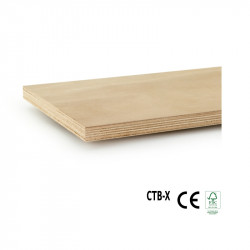
The strip-planking hull with wood-epoxy is a modern remake of the traditional wood construction for a monolith as light as that of a fiberglass sandwich but structurally more strong, of lower cost and easier to build for a good amateur self-builder as well as for a small artizan shipwright.

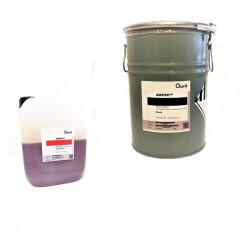
The modern GURIT AMPRO epoxy system with high technical content but with great attention to ecology gives wood a new life in nautical constructions, in absolute competition with fiberglass for costs and quality, but above all dispelling the false myth that this noble material requires much more maintenance. The skill of the craftsman or amateur self-builder will give the hull the added value of customization, impossible in mass production, which will make each boat a unique and unrepeatable object, different from all the others.
Foschi's "building advice" leaves out no detail:

The length of 8 meters is a courageous but well-considered choice: it is the right size for a small cruising boat with a minimum of "real" liveability and with still reasonable running costs!
Almost all shipyards snub new boats of this size, offering larger models or far more profitable hyper-technological hulls; in the used market you can find beautiful boats at low prices but also old hulls with worn structures, engines and equipment, with the result that the final cost including any restorations or refitting is often much higher than its purchase price or not. so much less than a one-off new construction!
This small boat will be built mainly as a vessel for navigation within 12 miles from the coast, according to Italian legislation, given the length of 8 meters with the related bureaucratic facilitations, and related limitations, for boats within 10 meters, but its design characteristics are certainly for a more demanding use. For this reason the architect Rodolfo Foschi simply defined it as a "smal cutter for sailing".
download: "short meditation on materials and construction" by Rodolfo Foschi. He does it his way...

 Idea850 n.1, German Baltic Sea
 Caribbea 31 for sale
 Crispy 520 on the water